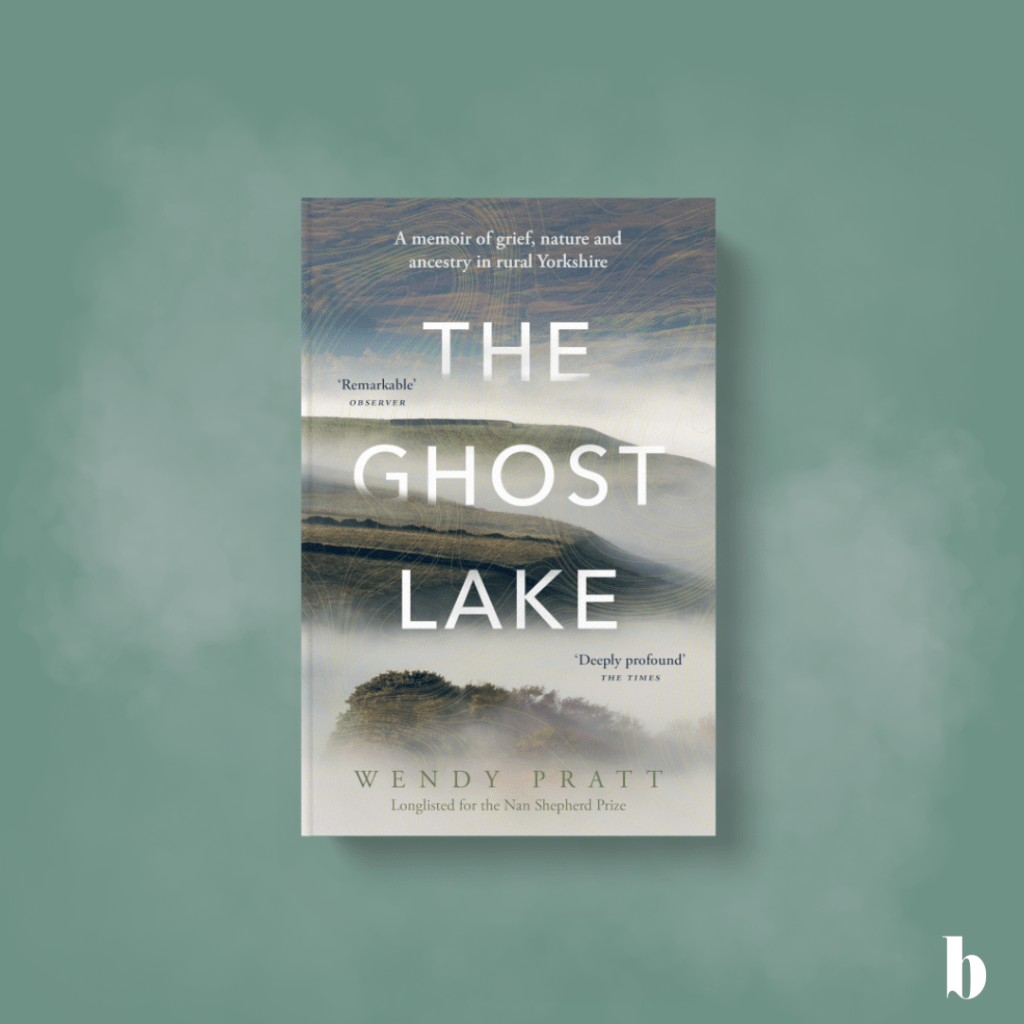
Another brilliant working-class writer, I could not put this book down. Rich in landscape and emotion I felt as if I were there with Wendy, searching the ancient landscape of her home as she excavates her ties to this ancient land through class, grief, and neurodiversity. This is my book of the year so far. i read this book slowly, savouring each word. This is a book you will read more than once, when I’d finished I had a longing to visit Wendy’s Ghost Lake.
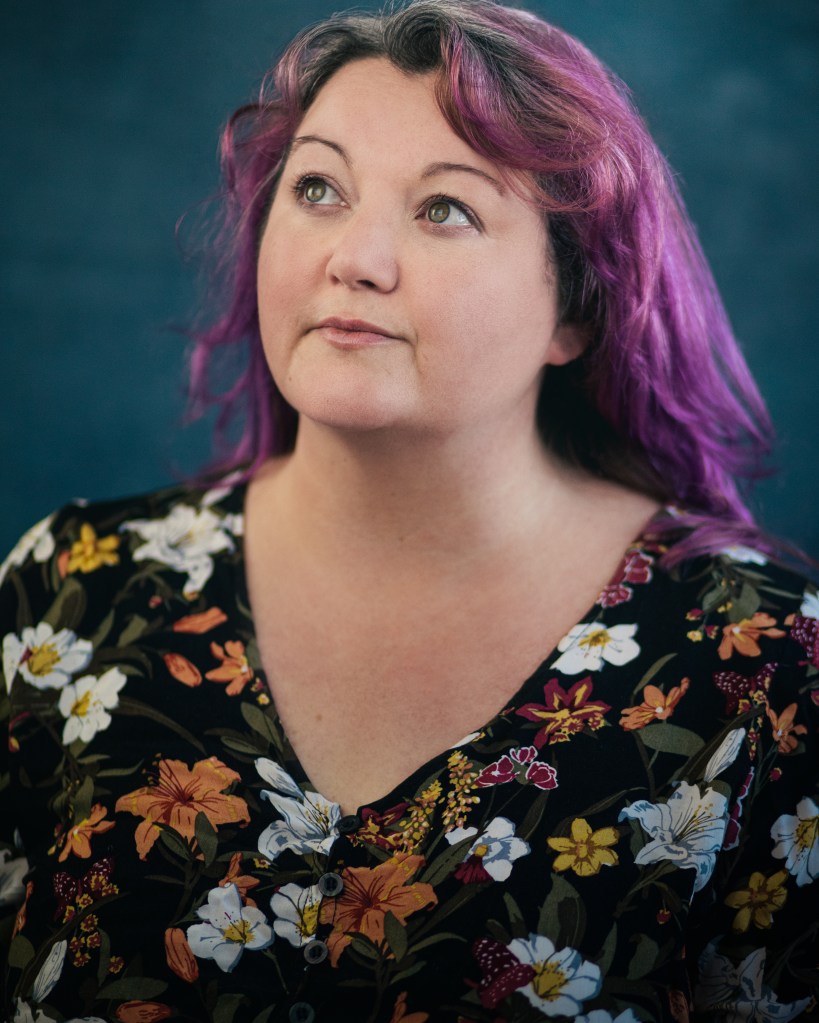
Wendy Pratt is an author, poet and editor living on the North Yorkshire coast. Her nature-landscape memoir, The Ghost Lake was described by the observer as ‘remarkable’. The Ghost Lake was published in 2024 by The Borough Press and had previously been longlisted in the Nan Shepherd Prize. Wendy’s latest poetry collection, Blackbird Singing at Dusk was published in 2024 by Nine Arches Press. She is the founder and editor of Spelt magazine, a magazine dedicated to celebrating and validating the rural experience. Wendy runs courses and workshops, mainly through her substack Notes from the Margin. In July 2025 Wendy will be spending time as a fellow of the Folger Shakespeare Library as part of the research into a new historical fiction novel.

Can you tell us a little about the book?
I call The Ghost Lake a ‘nature-landscape memoir’. It doesn’t fit neatly into a single category, but I don’t think stories, or people, ever really do fit neatly into categories. It’s a book in which I explore my own connection to the landscape I grew up on, which is the site of a long extinct lake. The ‘ghost lake’ of the title is Paleolake Flixton, a site that is enormously important in terms of archaeology, being one of the best-preserved sites of Mesolithic (middle stone age) habitation in Europe. When I found myself middle aged and existing in a series of liminal spaces – as a bereaved mother, as a working class person working in a middle class dominated world, as a self-certified eccentric in a world of people who seemed to understand the rules of society better than myself – I decided to make a concerted effort to reconnect myself to the world on my own terms, as a person who had grown up in a rural environment. I set out on a series of what I called ‘pilgrimages’ – places on the lake site that had held some significance to me in the past. On each pilgrimage I wanted to be connected to the physical landscape, but also the people who came before me in that landscape. It was important for me to recognise earlier versions of myself within the story of the landscape, and accept and love those versions, even when things had been traumatic or painful. The Ghost Lake is an exploration, at the end of the day, on what it means to belong.
Why did you write this book?
Partly as an exploration of self, but also because I got sick of never seeing working class stories about history and landscape told by working class people. Working class people should be able to tell the stories of their ancestry on their own terms.
When did you first start writing?
I have always written, on and off over the years, since being a child. But I began to take my work more seriously in 2008 when I began building a career, initially as a poet. It took a long time to reach the point at which I work full time as a writer, with a portfolio of different writer related work facilitating and funding my writing time.
How has writing a memoir impacted or changed your life?
As a personal journey I now find I can write about subjects other than the impact of grief – I lost my baby daughter in 2010 in part due to clinical negligence. She was an IVF baby, and we couldn’t have more children, which had an enormous impact on my life. The Ghost Lake feels like it was the final part of healing, in which I fully took control of that process. Previous to The Ghost Lake I had been drawn back to grief in everything I wrote. Now I feel like I can write wholeheartedly on other subjects. In terms of being a writer: getting an agent (the brilliant Caro Clarke who has a substack too) and securing the book deal with Harper Collins gave me the confidence to start valuing my work not just as a career, but as something that could have impact and was valuable in its own right. I knew for a long time that I wanted to be a writer but didn’t see many people like me doing that. I don’t come from that sort of background. The validation of having this complex, ambitious book published gave me the confidence in myself as a writer, the confidence in my own abilities, my work and my right to take up space.
How did you balance the need to be honest and authentic, with the need to protect the privacy of yourself and others in your memoir?
I felt like I could tell my own story without worrying too much, it is, after all, my story. But I was quite protective of my family, as their versions of their own stories are theirs. It’s a tough balance.
You have written more than one memoir; did you always plan that? Has your process changed with each book
Can you tell us a little about your writing practice?
I tend to burrow into projects. I don’t like to work on anything else if I’m working on a book. I try to get eight hours sleep and have found that my brain is at its best early in the morning. My practice tends to be to read everything and anything about my subject, visit physical places and world-build by a process of osmosis, until I feel I know enough about my subject to write with flow and energy. I prioritise my writing, but also need to pay my bills. I prefer to have whole days of writing so will do my paid work in monthly blocks, then take a month in which my priority is just writing. Being completely absorbed in one thing at a time works the best for me.
What advice would you have wanted to be given as an aspiring writer?
You don’t have to create value in yourself by promoting other people’s work over your own. Your work has value. Take up space. There’s a place at the table for you too.
Do you ever get feedback from readers and what do they say?
I do! And it’s probably the most nourishing part of the business. People tend to come up to me after readings in particular to talk about their own connections to landscape and their own experiences of loss and grief, and it’s an honour to be a platform for that. It’s genuinely humbling. I live with quite debilitating anxiety, and it makes any sort of public engagement, even as an audience member, very difficult. Pushing through the discomfort of that anxiety and then having people connect with the work makes all of the rubbish stuff worthwhile. It’s nourishing.
Did you have a favourite book as a child?
Watership Down, The Call of the Wild, The Hitchhiker’s Guide to the Galaxy. I could go on, and I can’t choose.
What are you reading now?
I am reading A Brief History of the Countryside in 100 Objects by Sally Coulthard, A Place of Greater Safety by Hilary Mantel and One Day by David Nichols on audio book.
Are you a member of your local Library?
I am. It’s essential if you need to research widely and a fantastic resource. I always recommend people try taking books out of libraries as authors get a small payment when you do.
What are you working on next?
I’ve just found out I’ve been awarded a fellowship with the Folger Shakespeare Library for research on a new literary historical fiction novel. All very exciting.
 Bordering Grey